French
"Accompagner les entreprises vers la neutralité carbone" Jean-Jérôme Semat pour Forbes
989 views
"Pour atteindre la neutralité carbone, il faut faire appel aux nouvelles technologies : nous accompagnons nos clientes et clients dans cette démarche."
View transcript
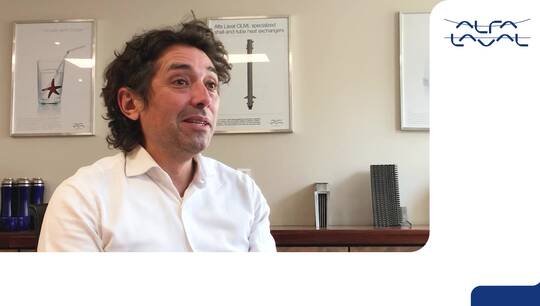
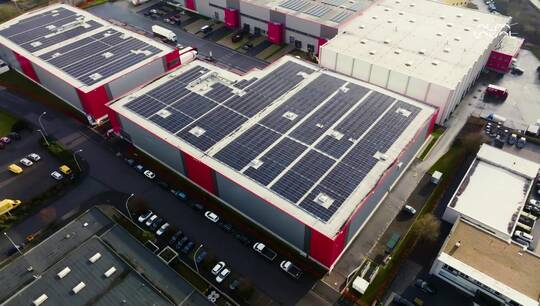
Hello everyone, welcome to Business Inside. This space hosted by Forbes magazine is dedicated to companies to tell us where they come from, and especially where they want to go, what their development capabilities are. - Jean-Jérôme Semat, hello, - Hello. - You are president Alfa Laval for France, North West Africa, you belong to a group that is Swedish is that right? - Alfa Laval is one of the largest companies in Sweden, which is listed on the Swedish market, and which is the first Swedish company to have established itself on the French market in 1907, more than 100 years ago. - Then you're responsible for an important business since it is the heart of Europe, right? - In France we have 4 industrial cities, that's 850 employees, out of a group that counts 17,000, so yes France is an important country to the group. - When I saw what you were doing: "provider of innovative engineering solutions", I thought to myself "it is a digital company ". But no, you are in the "real industry", you make "real products" if I dare say! - Indeed we make real products, we have three technologies that are the most important: fluid separation - it's actually very much related to fluids, we're really in the heart of the customers' industrial process -, heat exchange, and then everything about fluid transfer: pumps, valves... - Wait, it's still too complicated, we have to explain. What is the separation between hot and cold, a water heater? - It could be. For example this morning you had to shower, with hot water, that means cold water came from the network, it went through a plate exchanger, and you got hot water at the outlet. - So the plate is from you? - Yes, the plate is from us. But also in the food industry: maybe you put a little milk in your coffee, and the milk needs to be pasteurized. So you need a heat exchanger to do this pasteurization operation, and you will separate the cream from the milk so you also need a separator. This is our expertise, they're the products we make in various industrial areas. There are 3 business divisions in which we intervene, which are areas that make the planet go round: the field of energy, from production to distribution, The field that impacts human life: agri-food, medicines production and water treatment Then the last field is transportation, since we live in a globalized world, we do transport and, in particular, by boat, hence marine transportation. These are the three business divisions in which we sell our equipment, within the customers' process. - Activities that have undoubtedly been directly impacted by COVID and by the blocking of global activities... I am thinking in particular of marine transportation, but there also might be activities that benefit from opportunities left by the crisis? - I would say there are both. We have never stopped working, we have never closed our factories, we have always continued our activity, and then you said it, I would say that this crisis has raised awareness. For example, the group has announced to be carbon neutral by 2030, and this is common to a lot of our customers. Then why is it important? Because the challenge common to these three areas of activity, is that we have more and more demand, that is, we consume more and more energy through our needs. The agri-food part is changing, the population is changing and then we are in a world that is globalized and we need more and more to transport goods. - Globalized, carbon producer... You have all the flaws possible! So that's what you're working on? - You hit the sensitive point: all these human activities generate CO2 When we generate CO2 through our equipment, we will actually reduce the existing CO2. It's important for existing industrial activities. But that's not enough: if you want to be carbon neutral, you also have to use new technologies to reach this neutrality, and we support customers in this process. - But you have to be yourself in this process! So it requires transforming your industrial sites? - We need to indeed. Concretely it requires that we do this. This is an approach that we have already launched. We've given ourselves a decade. What you need to see is that it takes a lot of time, it is not done by snapping your fingers, it is true both for us and it is true for our customers. So since 2017 we switched to green electricity on all industrial sites in France for example. We are changing our fleet of vehicles, we have a reflection on hybrid, all-electric... These are the kind of things we do. - But in the services you provide, in the products you sell, is it going through a complete paradigm shift, for example from fossil energy to natural energy ? - Well it can be. Then the first thing we'll do is look at the existing on a customer's industrial site. The first thing we're going to try is changing technology. Let me give you an example: the refinery market. It's a very traditional market, historical, we're in oil & gas. - So we're not building new refineries every day, right? - No, on the other hand, you can improve some things. So recently we concluded a deal with a great French oil & gas actor - not to mention it -, to replace a conventional tube exchanger technology, called tubular, by plate exchangers. It means 16,000 tons less CO2 per year. This is the kind of thing and the kind of expertise that we bring to the client and that we have to work on every day because on the existing one, we will do that, but that's not enough. - You are probably much awaited on all that has to do with man; his health, his consumption, the preservation of his environment? So agri-food... - In agri-food, we will mainly work on waste recovery. Any agri-food production will mean that in the end you have waste. This is a first axis to work on. - That is, you are an equipment supplier for all waste sites and people who work in this field? - It is not necessarily about waste plants, but about the industrial process. Another example: you are a consumer of fruit juice? Perhaps apple juice? We have a lot of apple juice growers today. All these growers today have a problem: the fruit, the apple once they have crushed, processed, and extracted the juice, still leaves a waste. Today this waste is thrown away. - But it's biodegradable? - It's biodegradable, but you still throw it away, so it's still waste. Today, through the products we have, in that case a decanter, they're going to collect this waste there and make it a fruit puree, apple puree that they're going to put in aseptic packaging, and sell it. So it's a way for them to increase competitiveness. They will sell it to other food companies to make pie funds or to use in pastries for example. So they improve already by making the process cleaner and more profitable to the end. - You uttered the word competitiveness, because this change we're talking about usually raises an issue. It's very fashionable to go green, but it's not necessarily profitable for both the farmer or distributor, or even the consumer who is forced to pay a little more for what they're going to consume. Is this really compatible in the medium term? - This is actually why you would have this approach, to not leave waste unused, to change things so that the former waste can become valuable for the customers which allow them to buy raw supplies, go on organic and high-quality. So it really helps to gain competitiveness, and in the same way on existing products with energy recovery. In all these industrial agri-food sites if we keep this example, we use a lot of compressed air. These compressors give off heat. We will recover this heat, pass it through an exchanger and produce domestic hot water that is used for cleaning. These are kilowatt/hours you will not buy so automatically you will be much more competitive in the manufacture of your products. - Is there a spontaneous demand from manufacturers to make these mutations, or not? - Yes, there is a big demand today because all the industry actors have this same concern. A concern both about the gain of competitiveness and an ambition to move towards carbon neutrality. - And to satisfy both its employees, its customers, its shareholders who are asking for it. - Yes - you quoted all of them stakeholders and it is important for all of them that we respond to this demand. - Is Alfa Laval typically Swedish in terms of its culture, its processes, its management methods? - So yes it's very Swedish, our internal language is English, it's anecdotal but it's also what makes it possible to share internally. - But is it very Swedish in the sense that it's intransigent internally regarding all these values that you define yourself? - Values are important and we have also redefined them in our mantra or our raison d'être, we know why we get up in the morning: to accelerate the success of the planet, our employees, and our customers. This is something important. - Alfa Laval! You have to go to the website. - You have to go to our website, to discover our products and also maybe to find a job, since we are recruiting! You see, as I speak to you today, for France we have 37 open positions. So we are looking for collaborators who are curious, who want to give meaning to their work, and who want to contribute to this process of helping customers and industrialists to be carbon neutral. I think this is a great ambition. - Jean-Jérôme Semat, thank you very much. As a reminder for our viewers, you are President of Alfa Laval for France, North Africa and West Africa. - Thank you.